Rice and Breads
Authentic Flaky Lachha Paratha Recipe
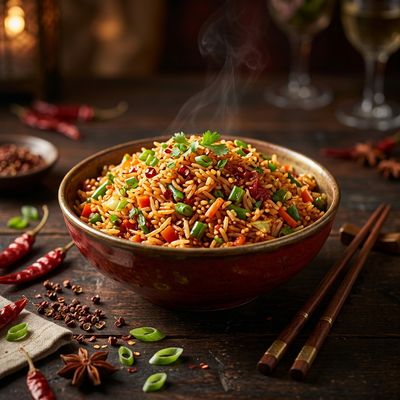
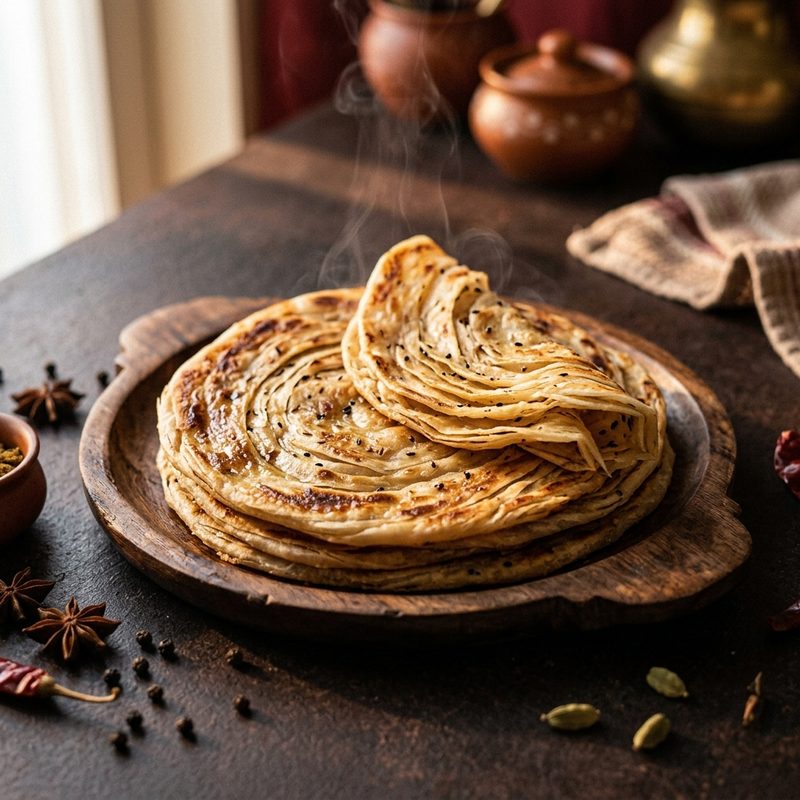
A masterclass in texture, this Lachha Paratha features dozens of paper-thin layers that shatter upon impact. Whether served alongside a spicy North Indian curry, shredded into an Indian-Chinese Chili Paratha, or drizzled with condensed milk in the Thai Roti style, this versatile flatbread is a home kitchen essential.
- Prep
- 45 min
- Cook
- 20 min
- Serves
- 4
- Level
- Intermediate
- Per serving
- 320 kcal
Method
In a large bowl, combine the whole wheat flour, all-purpose flour, and salt. Add 1 tablespoon of ghee and rub it into the flour with your fingertips until it resembles coarse crumbs.
Gradually add warm water and knead for 8-10 minutes until you achieve a soft, pliable, and non-sticky dough. Cover with a damp cloth and rest for at least 30 minutes to allow the gluten to relax.
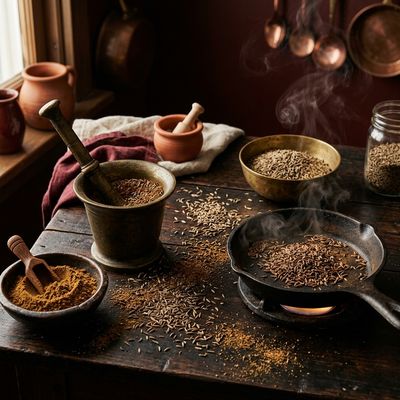
Prepare the spice-fat infusion: Heat 3 tablespoons of ghee in a small pan. Once warm, add the Ajwain (carom seeds) to be bloomed in oil. Let them sizzle for 10 seconds to release their digestive properties and thyme-like aroma, then remove from heat.
Divide the rested dough into 4 equal balls. Roll one ball into a very thin, translucent circle on a lightly floured surface.
Brush a generous layer of the Ajwain-bloomed ghee over the entire surface. Lightly sprinkle a pinch of dry flour over the ghee—this creates the physical barrier needed for distinct layers.
Create the layers using the pleating method: fold the dough like a paper fan (accordion style) from one end to the other. Stretch the long pleated strip slightly, then roll it into a tight spiral coil, tucking the end underneath.
Sprinkle a few Kalonji (nigella seeds) on top of the coil as a finish for a sharp, onion-like bite. Gently press them in.
Roll the coil out into a 6-7 inch disc, being careful not to apply too much pressure, which would fuse the layers back together.
Heat a heavy-bottomed tawa or griddle over medium-high heat. Place the paratha on the hot surface. Cook for 30 seconds until small bubbles appear.
Flip and apply a teaspoon of plain ghee on the cooked side. Flip again and apply ghee to the other side. Press gently with a spatula, rotating the bread until both sides are spotted with dark brown patches and the layers begin to separate and fan out.
Notes
The resting period is non-negotiable; if the dough is too elastic, the layers will snap back and lose their definition.
For Thai-style Roti, replace the salt with a pinch of sugar in the dough and use butter instead of ghee.
To maximize the 'flakiness' after cooking, place the paratha between your palms and give it a gentle 'scrunch' or crush to loosen the layers.
Bloom the Ajwain in warm ghee rather than adding it dry to the dough; the fat carries the flavor into every single fold.