Guide
The Art of Tempering Mustard Seeds in Indian, Thai, and Indo-Chinese Cooking
Tempering is the heartbeat of many Asian cuisines, a technique where whole spices are bloomed in hot fat to release their essential oils. This guide explores the critical timing of the 'mustard seed pop' and how to layer spices in Indian, Thai, and Indian-Chinese home cooking.
The Fundamental Technique: The Physics of the Pop
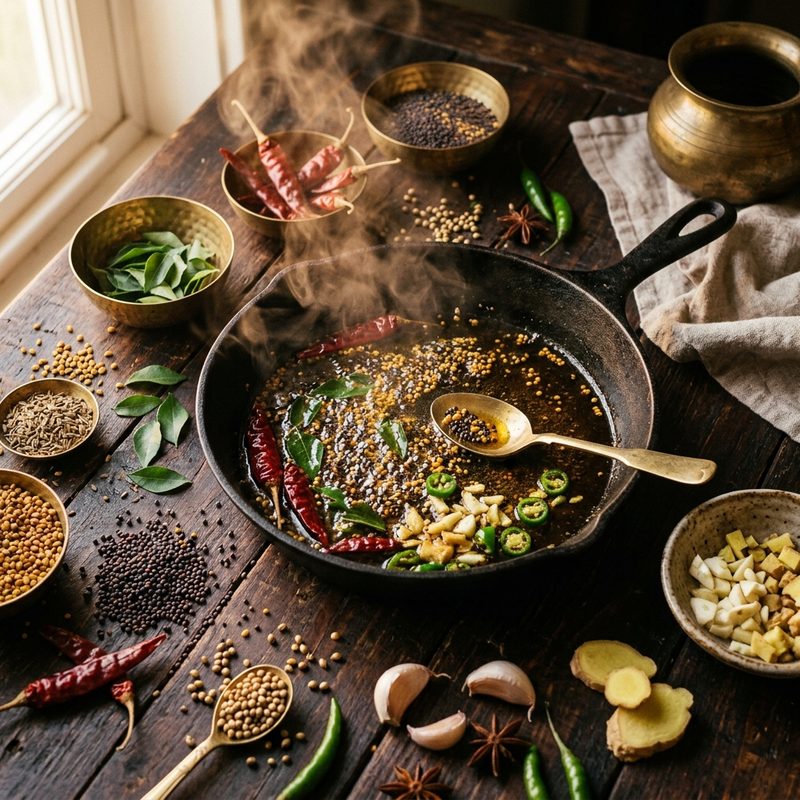
In the home kitchen, mustard seeds serve as the primary indicator of oil temperature. Whether you are using black, brown, or yellow seeds, they must reach a temperature where the moisture inside the hull turns to steam and 'pops.' This is the tempering moment (known as Tadka or Chhonk). If the oil is too cold, the seeds remain bitter and gritty; if too hot, they burn instantly. Always have your subsequent ingredients ready, as the window between popping and burning is less than ten seconds.
The South Indian Tadka: Dal Tadka and Curd Rice
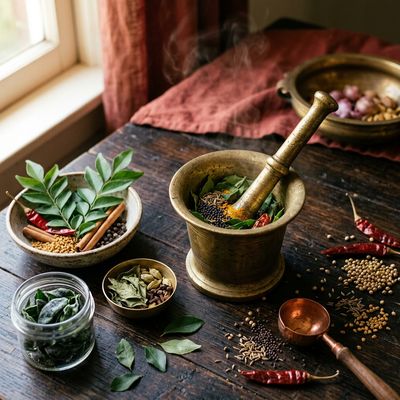
In Indian cuisine, the sequence is everything. For a classic Dal Tadka or Curd Rice, heat neutral oil or ghee until a single seed sizzles immediately. First, add the black mustard seeds (tempering). Once they begin to crackle and dance, add the dried red chilies and urad dal (blooming). When the dal turns golden, add the curry leaves and a pinch of hing/asafoetida (finished at the end of the temper). This entire oil mixture is then poured over the cooked dish. The curry leaves should be added last to the oil because their water content causes significant splashing.
The Indian-Chinese Hybrid: Szechuan-Style Mustard Bloom
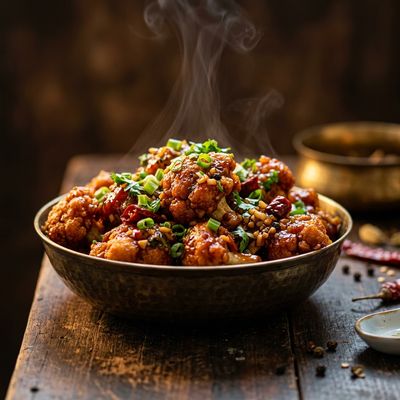
In Indian-Chinese (Indo-Chinese) cooking, such as in the base for Chilli Chicken or Gobi Manchurian, mustard seeds provide a pungent depth that bridges the two cultures. Heat the wok until smoking. Add the mustard seeds (tempering) first. As soon as they pop, immediately add finely minced ginger, garlic, and green chilies (blooming). This 'bloom' creates the aromatic foundation before the soy sauce and cornstarch-thickened gravies are introduced. The mustard seeds should be fully popped before the wet aromatics enter the pan to avoid 'steaming' the spices.
Thai and Malay Influences: Southern Thai Pickles and Curries
While less common in Central Thai cooking, mustard seeds are vital in Southern Thai dishes like Phhat Phrik or specific regional pickles (Achar). In these dishes, the mustard seeds are often part of a 'dry' temper. Heat a small amount of oil, add the mustard seeds (tempering), and once they pop, add sliced shallots and lemongrass (blooming). Unlike the Indian method where the oil is poured over a finished dish, here the vegetables or proteins are added directly into the tempered oil to be stir-fried. The turmeric and chili powder are added as finishing spices just before the liquid components to prevent burning.
What Can Be Made Ahead
The beauty of tempering is its portability. You can prepare a 'Tadka Base' by tempering mustard seeds and blooming curry leaves and dried chilies in oil, then allowing it to cool. This infused oil can be stored in a glass jar for up to one week. Similarly, for Indian-Chinese dishes, the garlic-ginger-mustard seed bloom can be prepared as a paste in oil and refrigerated. When ready to cook, simply heat a tablespoon of this flavored fat to jumpstart your stir-fry.